Chairs
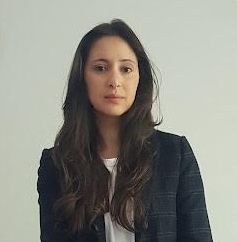
Laura Gatti
Universidad de Montevideo, Uruguay.
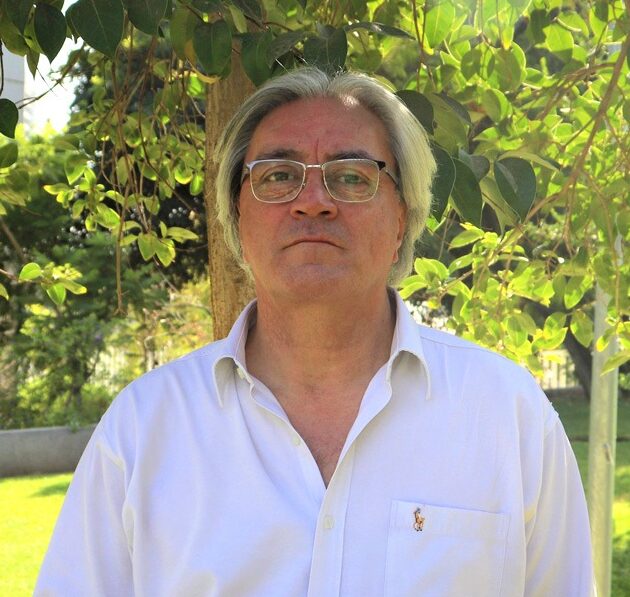
Mauricio Solar
Universidad Técnica Federico Santa María, Chile.
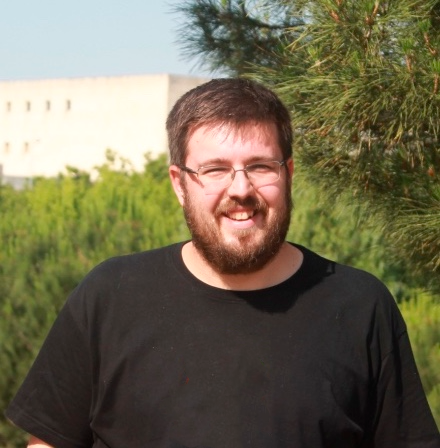
Enrique Moguel
Universidad de Extremadura, España.
What is it about?
As quantum computing evolves and becomes applicable, the need for systematic, disciplined, and quantifiable approaches to the development, operation, and maintenance of quantum software (and the classical software with which it integrates) grows. Much of what we have learned in decades of research, innovation, and development in Software Engineering is applicable in this new hybrid quantum-classical reality. Still, this new context poses questions, challenges, and opportunities; identifying, characterizing, and addressing them is the focus of Quantum Software Engineering.
This workshop aims to serve as a discussion forum, with a special focus on mobilizing the Latin American community, on how to produce quantum software, taking into account lessons learned from classical software engineering and showcasing novel approaches. This involves applying or adapting existing software engineering processes, methods, techniques, and principles so that they can be used in quantum software development. It also seeks to define new methods and techniques that will help create quantum software with the appropriate quality attributes.
Topics of interest
- Quantum programming techniques and practices;
- Quantum software design;
- Quantum computing algorithms;
- Quantum software engineering methodologies;
- Quantum software services;
- Quantum program analysis and design;
- Quantum program testing and verification;
- Quantum software quality assurance;
- Quantum software evolution and maintenance;
- Quantum software modeling;
- Automating quantum software production;
- Model-driven engineering and generative techniques for quantum software;
- Metrics for quantum software;
- Frameworks and tools for developing quantum programs;
- Service-oriented quantum software;
- Experiments with quantum software;
- Quantum software execution;
- Industrial applications;
- Empirical evaluations.
Program Committee Members
- Alejandro Fernandez, Universidad Nacional de La Plata, Argentina – email
- Claudia Pons, Universidad Abierta Interamericana, Argentina – email
- Federico Holik, Instituto de Física de La Plata, Argentina – email
- Guilherme Horta Travassos, Universidade Federal do Rio de Janeiro, Brasil – email
- Hernán Astudillo, Universidad Andrés Bello, Chile – email
- Ignacio García Rodríguez de Guzmán, Universidad de Castilla – La Mancha, España – email
- Enrique Moguel, Universidad de Extremadura, España – email
- José Manuel García Alonso, Universidad de Extremadura, España – email
- Juan Manuel Murillo Rodriguez, Universidad de Extremadura, España – email
- Julio Ariel Hurtado Alegria, Universidad del Cauca, Colombia – email
- Laura Gatti, Universidad de Montevideo, Uruguay – email
- Luca, Cernuzzi, Universidad Autónoma de Asunción, Paraguay – email
- Luis Freddy Muñoz Sanabria, Federación Universitaria de Popayán, Colombia – email
- Luis Mariano Bibbo, Universidad Nacional de La Plata, Argentina – email
- Marcos Villagra, Universidad Nacional de Asunción, Paraguay – email
- Mario Piattini, Universidad de Castilla – La Mancha, España – email
- Octavio Malherbe, Universidad de la República, Uruguay – email
- Oscar Pastor, Universidad Politécnica de Valencia, España – email
- Pablo Ruiz Melenje, UNICOMFACAUCA, Colombia – email
- Ricardo Pérez del Castillo, Universidad de Castilla – La Mancha, España – email
- Ricardo Rosenfeld, Universidad Nacional de La Plata, Arentina – email
- Salvador Elías Venegas Andraca, Tecnológico de Monterrey, México – email
- Samuel Eduardo Sepúlveda Cuevas, Universidad de La Frontera, Chile – email
- Valter Camargo, Universidade Federal do Säo Carlos, Brasil – email
More Information
For more details and updates on TLISC 2025, please visit their website https://www.ripaisc.net/tlisc-2025/